
Who's Moving Whom?
A walk in three machine movements

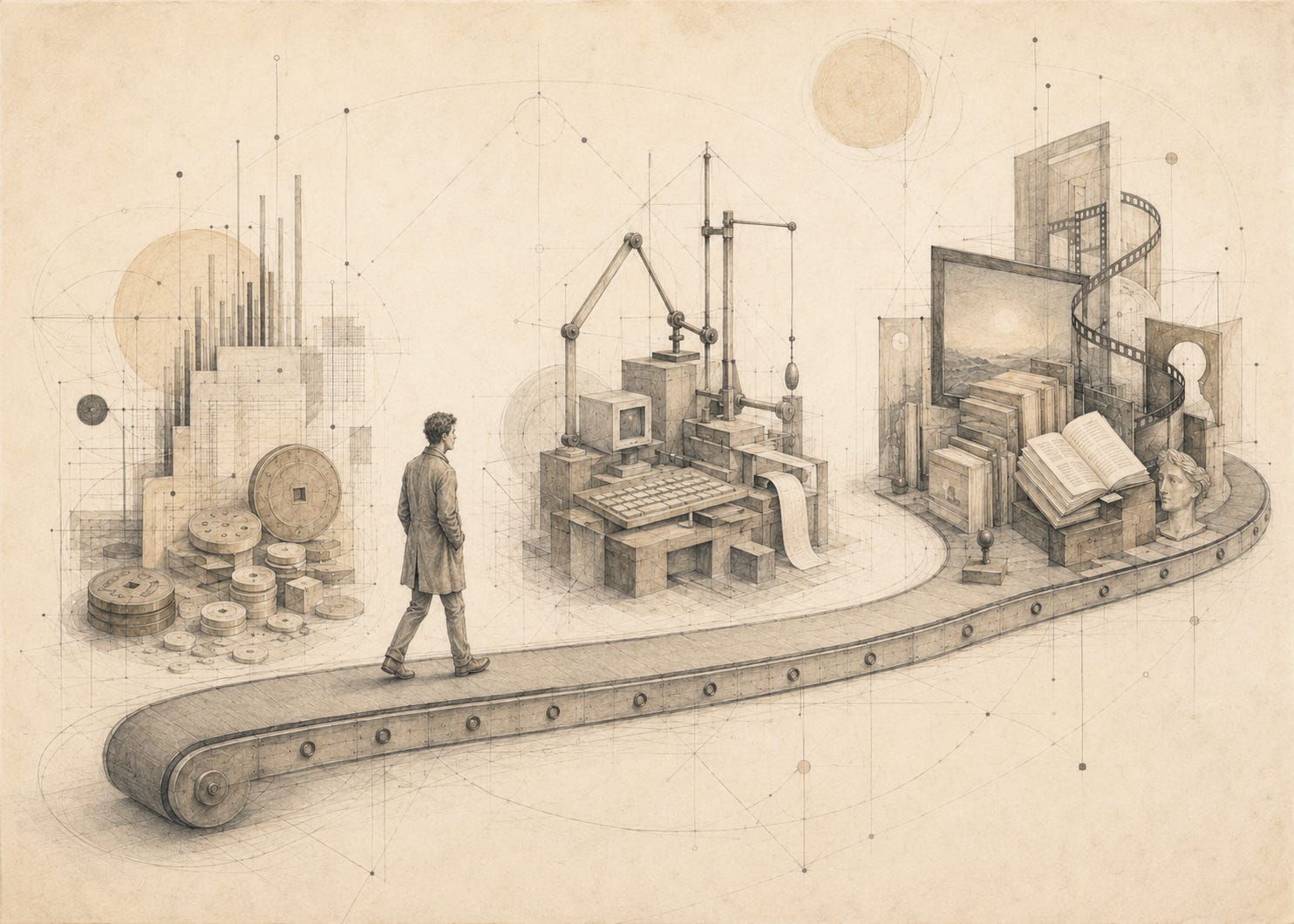
Last week, the good folks at Gemic asked me to bring a question to “An Evening on Emergent Intelligences.” Here’s what I came up with on a long stroll to their office.
Can Machines Move?
A walk in three machine movements.
1. Moving value.
At MultiversX, we build decentralized infrastructure — moving information at scale, without intermediaries. When the technology was first conceived, it was meant to revolutionize how humans transact. Peer-to-peer, at any time, to and from anywhere.
But perhaps blockchain was made for a different species. With the emergence of autonomous agents, a new economic actor has arrived. And it needs a medium for expressing intent. That medium is money. And it may turn out that we were building the decentralized internet for agents all along.
2. Moving labor.
As a non-technical fly on the wall in a highly technical environment, I’ve had a glimpse into “the future of work” — which has been the present of work for a while now. We’ve restructured operations around it. As a result, our engineering team has shrunk drastically over the past year.
Yet few outside this small bubble can feel the shift. Fewer than 1% of the global population uses AI in any meaningful way. Public conversation oscillates between novelty stories and existential warnings, while political debate about the implications of the potentially most disruptive technology in human history has yet to begin.
To provide a starting point, I recently built the Large Labor Model with Enya Trenholm-Jensen that traces labor across the past 250 years, mapped against the capabilities of today’s frontier autonomous systems. Every prior transformation of work displaced old categories and created new ones; this model examines whether that pattern continues, or whether autonomous systems are arriving not to reshape work but to redefine it.
Jobs involving numbers and computers come up almost entirely replaceable by 2041. This should hardly surprise us. But even creative fields score 84%, with around 90% for journalists, authors, illustrators, advertisers, in just over a decade. Personally and professionally, I’m skeptical.
3. Moving, beyond people.
Humans get moved by machines all the time. Tell them they’re hot and smart, and they’ll fall in love or declare you conscious.
But meaning-making, mechanized? Culture, computerized?
Beyond micro-targeted manipulation, it is at least questionable whether machines will ever be able to make meaningful contributions to, say, the literary canon, or genuinely move human culture.
Then again, if machines become real actors in the economy, and the primary consumers of content on the internet, the customer of meaning-making may shift. And once again, what we thought was a human endeavor takes a different shape entirely. Eventually, we may have to ask: who is moving whom?
I’m working on a longer essay on the matter, chiefly informed by a strange literary experiment I’ve been running for a few weeks. You can follow along on https://readproof.art/.